Patsy Lucas – Club President in Focus
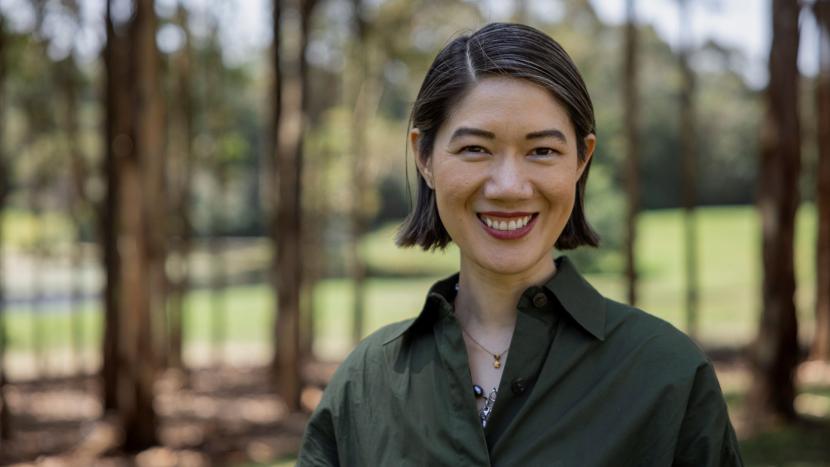
Patsy Lucas has been President of Murwillumbah Services Club since 2020. Since starting in the position, Patsy introduced a skill matrix to the Board to find blind spots within the directors, providing upskilling to ensure a more powerful outfit to suit the ever-evolving industry. Following a career of training and transforming leaders across many businesses and industries, Patsy has transformed the Board into a highly skilled specialist group equipped to handle the club industry and its changes.
ClubLIFE sat down with Patsy to discuss her career in the club industry and to understand her role as the Club’s President.
Q. Can you start by giving us some background on your career?
A. I studied education (teaching) and psychology in Sydney after I finished my six years at boarding school, which led me into the teaching workforce. It was a few years before I became the director of what was the largest childcare centre in NSW if not Australia at the time. It was during this time that I began to diversify into training and consulting work, helping out and training staff from other centres. I then moved to London where I worked for four years both teaching and consulting. The consulting work involved businesses looking at work-based childcare and aged care options for their employees.
My return to Australia saw me move into the field of work/family options for employees in Sydney where I did a lot of consulting work in both the private and public sectors, creating strategies and frameworks for women to return to the workforce. Throughout my career, I was continuously lecturing and training employees in effective communication in the workplace and professional development — mainly in leadership and team building.
When we moved to Murwillumbah in 2011, I asked my dentist if he knew anybody at the RSL sub-branch and I was quickly put into contact with the President, Derek Sims. I began assisting the sub-branch with a World War I research project, working on the history of all the WWI diggers from the Tweed Region. This included working closely with the Murwillumbah Services Club CEO Guy Diven for many years. After seven or so years, Derek decided to retire from the Board, so he and another sub-branch member nominated me, hence the beginning of my journey on the Board at Murwillumbah Services Club as a director in 2017. I was then elected as President in 2020.
Q. Tell us about a mentor who has been a part of your career. What advice did they give you?
A. When I started working at the sub-branch and doing my WWI research, and then became involved in the Club more as a director, Guy Diven was my mentor. In “Club Land”, Guy was my go-to person because he's so capable, intelligent and fair — he held my hand along the way, so I could understand more about the industry. I was really determined from the beginning of my journey to follow due process and I knew as a Board we needed to live by the constitution, and Guy was all over that. We have a really strong, positive relationship, and he has an outstanding relationship with the rest of the Board. We have the same standard of ethics and values, which is really important.
Outside the club industry, I credit my character and work ethic to my upbringing and family. I grew up on a property in Coonabarabran in north-western NSW. I was always surrounded by really sincere, down to earth, honest, hard-working country people. I was supported and encouraged by my parents growing up on a farm. My Dad used to say to us: “if you fall down, you get up” and “your word is your honour” and that can be applied to anything in life. So, my greatest mentor really was my upbringing.
Q. What is something that you have brought to the Murwillumbah Services Club Board that you are proud of?
A. I've been on boards before and with my understanding of the levels of governance and compliance in tow, we have moved in a more skill-based direction. Initially, I spoke with the Club’s CEO Guy Diven and mentioned I really wanted to evaluate the skills of the Directors — and in turn, reevaluate the skill set as a group. There were many open conversations with the directors prior to completing the matrix. We completed the matrix as a group, I then collated the date and reported back to the Board. From there we looked at what skills were missing from the current group and made note of what areas we needed to focus on should someone step down. This became embedded in our Board structure moving forward.
Q. What does it mean to you to be the President of your Club’s Board?
A. I'm honoured that the Directors had faith in my ability and in me as a human being. I do think I'm an excellent role model for women in the community and our future generation. It’s all about trust, listening to others and treating everyone equally.
Q. How have you mentored others, and what is your advice to them?
A. If someone came to me about their career, I would always say never doubt yourself, be true to yourself and be honest. I think the best way to go about supporting someone is just to have those conversations to make sure they are being their authentic selves. My other piece of advice is to make doors open for you — if you want to move up the scale, be a decision maker and use the gifts that you've been given — utilise your natural talents.
When I was lecturing, my advice was to make it happen and skill yourself up and use your talents, because otherwise you're wasting your time and your skills. Leadership is about being a decision maker, not a fence sitter. Another really important factor I believe in is always being informed and prepared. If you're asked to participate in a meeting, say on a board or in a discussion in a senior position, don't arrive empty handed — do your homework and be prepared so that you can have an informed, confident voice.
Q. How can the industry better support women to grow into senior roles at clubs?
A. I asked one of our amazing ladies at the Club for her feedback on my role as President at the Club and her main point was about having a female presence on the Board — she said that is fantastic. She also said it's about having that voice and having a strong independent female as a role model. I asked her how it impacts her, and she said: “if you can do it, I can too”.
I strongly believe that visibility goes a long way and the more women we get into these positions like mine and my fellow female Directors’, the better supported women moving through the industry will feel. I'm a strong believer in education, training, supporting and mentoring women in the industry.
Q. What is your favourite part of your job and the club industry?
A. Being in a position where you can make a difference, being able to support others and being in an environment as part of the Board where you're supporting each other and knowing that you've created that. I'm proud of the work we've done around the skill-based directors, the skill matrix and what I've done there. However, my proudest moment and time has been participating in the WWI research project and being able to visit Gallipoli and the Western Front to lay a poppy at the gravesite of our fallen diggers from the Tweed Shire.
Q. What does the future of the club industry look like to you?
A. The Club is a fantastic Club — Guy and the staff are so professional, friendly and welcoming. The Board is inclusive and most supportive of the staff and what we provide for our community. We now have a more skill-based Board with a variety of skills and expertise. This in turn allows us to be more well-versed in adapting to the changes in the industry.
There needs to be continual growth and continuous education for all clubs. It would be an asset to the industry if clubs looked at the skills matrix and provided more training in this area. It's all about governance and compliance and moving with the times.
Related